Phone:
(701)814-6992
Physical address:
6296 Donnelly Plaza
Ratkeville, Bahamas.

Phone:
(701)814-6992
Physical address:
6296 Donnelly Plaza
Ratkeville, Bahamas.
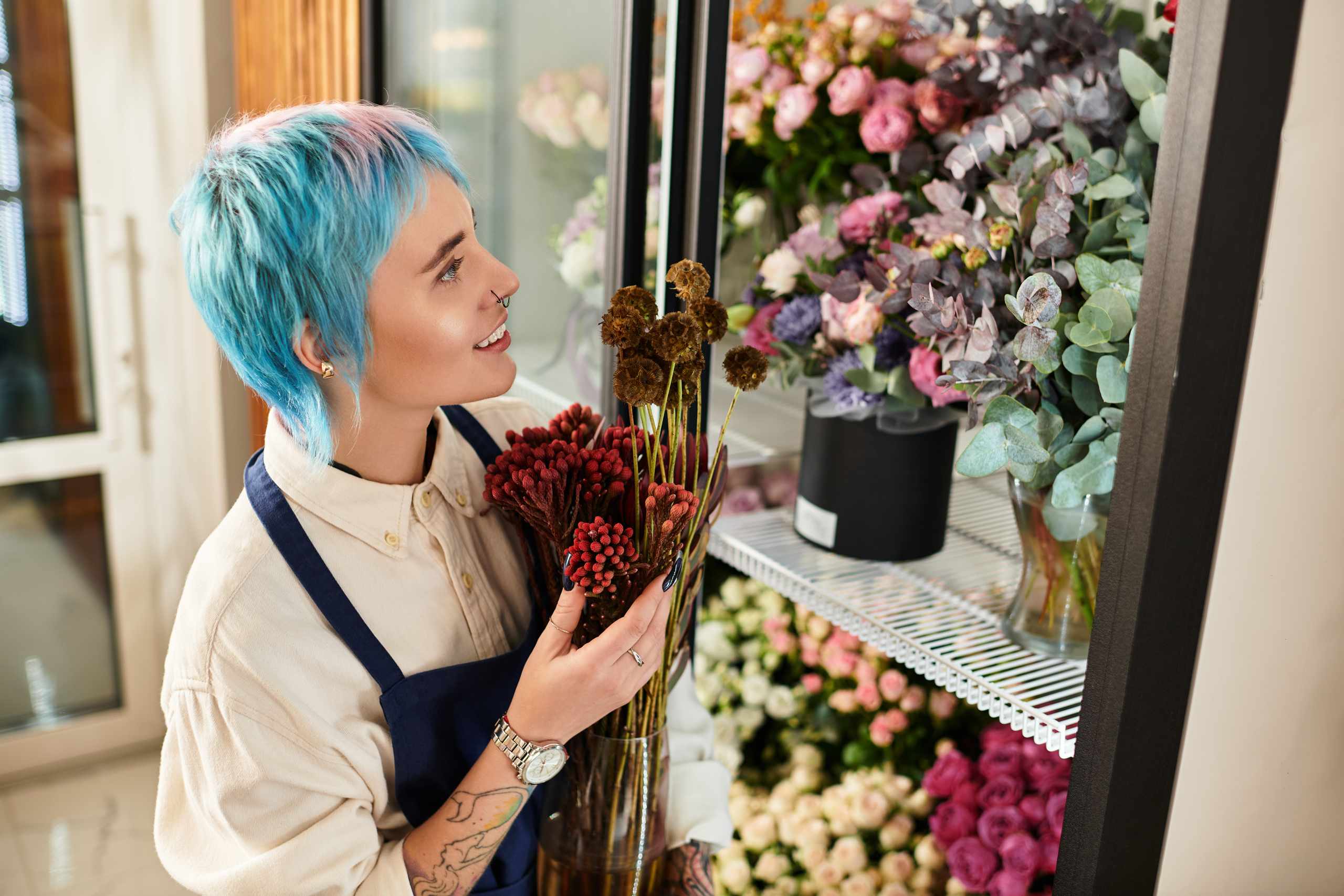
The usual issue here isn’t the selection of flowers. It’s that your floral design is flat. If every flower or leaf is at one height, or faces the same direction, or you’ve just made a design that is evenly filled without variation, that’s usually what leads to a flat arrangement.
Flowers that look great on your table lose some of their character once you put them together. To make things work well, you need variation. A stem here is going in a different direction than its neighbor. Some stems are in the front, some are in the back and some create a nice frame around the main shape. There are a few easy ways that anyone can add depth to a floral design. It’s not difficult and it doesn’t involve complicated things. It’s all about creating depth and creating depth for each element in your arrangement. It’s not just about the flowers. It’s not about the leaves and greenery. It’s about all of those elements coming together and each of them have room to do what they’re supposed to do.
If you think about the space you’re creating as an arrangement more as a little area with foreground and background as opposed to a circle of space that you’re trying to fill, it can make a huge difference. Let some of the flowers come forward of where most of the flowers and leaves are. Have one stem go back or go up or have a flower that’s not dead center. Have other elements around the sides of that flower to really support it rather than surround it on all sides. Most beginner florists are really good about not doing this because they’re constantly turning and looking at every angle. They are trying to do every side of their flowers or their arrangement exactly the same and that often will create a very stiff look for a design.
If you’re working in a vase or a bouquet, have one side of the flowers really come forward, one side go back and the other two just have that nice curve of leaves or branches. Have some sort of a direction to your piece or a front and a back and that really helps give you some room as opposed to having a 100 percent filled arrangement or just one flat face. If something looks flat, try picking out the stems that were most crowded and take them and reinsert them with more space or give more distance between the bloom head and other flowers.
I often think of greenery as filler. That’s a big reason why it can get flat. Greenery is not just there to fill and hide. There are ways to use greenery. They are the framework for your flowers. The framework gives your piece movement or structure and they really help support the flowers and the arrangement. Try using some greenery and just start an arrangement without flowers. You’d use greenery to build and create that frame or the space that you want to work in. You can create the shape and width of it without any flowers at all.
Notice that there’s some movement of branches that come up and some that are coming down and you have some that are going straight up. The stems have a nice arc to them instead of everything going just straight up or everything kind of cascading down. This can look flat. Everything can have some sort of a frame, some sort of an element that goes a little bit further out and one that holds it all together and another piece that kind of bridges it all in the middle.
If you look good in greenery, flowers will do great on their own and they’re going to look a lot better if you aren’t filling it tightly or packing it tightly because if they can move around and there’s some space in there. There is some breathing room between them. Color placement can affect your designs too. You will think you have a very pretty color in a bouquet or floral design and yet it just doesn’t seem to look as good as your other ones that you did.
There are many ways you can play with color. If you have the strongest or brightest or most interesting color is at the top, your bottom can seem very empty and you may be using the most popular color of the season and that color isn’t as popular for its bottom, but it’s just very bright. Or maybe you have lots of colors that are very light, but you have one cluster of dark colored flowers that are all in one spot and that can feel like it’s just too heavy and can’t really move on its own.
If you have 15 minutes, use the first 5 minutes to create a base with only greenery and 2 flowers. Then use the next 5 minutes to work on the spacing so there isn’t a lot of stem or flower head touching other flowers. Then use the last 5 minutes to take photos from the front and top slightly above and compare where the design seems more flat. Don’t do it, just keep trying to change things all the time. Just pick out 1 flower and do it again. Just pick 1 flower that you think needs to go a little bit further in, try pulling that one forward and another one back just to see what that one does. It’s not about restarting, it’s just about small shifts in things and you start to realize that you don’t just keep adding things and you don’t need as much. A couple of stems here or there can say much, much more than a handful of flowers.